
Field Notes From the Edge
Track five core habits. Reflect each morning and night. Build direction through repetition… not motivation.
A FREE 90-day structure for those who want to show up, not just think about it.
A Quick Note on Links
As an Amazon Associate I earn from qualifying purchases.
This helps me create more class content for you to get inspired by.
Please Note
Outdoor activities involve risk. The information on this site is for general guidance only and should not replace proper training, manufacturer instructions, local laws, or your own judgement. Always use equipment safely and responsibly.
Dry bags are boring until they save your kit.
Then they become one of the smartest things in your rucksack.
A good dry bag keeps your spare socks dry, stops your sleeping clothes turning damp, protects your power bank from sideways rain, and gives your phone a fighting chance when the weather decides to get personal.
For UK camping, hiking and EDC, waterproof storage is not just for kayakers and people who own too many expensive jackets. It is for anyone who has ever opened a rucksack after a wet walk and found everything inside slightly sad.
This guide covers the best dry bags and waterproof pouches for camping, hiking, wild camping, coastal walks and everyday carry.
Quick Picks: Best Dry Bags and Waterproof Pouches UK
Best overall dry bag: Sea to Summit Lightweight Dry Bag
Best budget dry bag: Alpkit Airlok Dry Bag
Best pack organiser: Osprey Ultralight Dry Sack
Best heavy-duty dry bag: Ortlieb Dry Bag PS10
Best phone pouch: Yosh Waterproof Phone Pouch
Best for electronics: Aquapac Small Waterproof Case
Best for wild camping: Exped Fold Drybag
Best pack liner: OEX Dry Bag Set
Why You Need Dry Bags
Most rucksacks are not properly waterproof.
They might be water-resistant. They might come with a rain cover. They might survive a shower. But in proper rain, damp grass, tent condensation or a leaky bottle incident, things inside can still get wet.
And some things really do not want to get wet:
- spare socks
- sleeping bags
- first-aid kit
- food
- sleep clothes
- phone
- notebook
- lighter
- down jackets
- power bank
- camera kit
- map
A dry bag is simple insurance.
It is not exciting. Neither is a first-aid kit. Both are very nice to have when things go sideways.
For a fuller safety setup, this first-aid kit guide covers the outdoor items worth carrying.
Dry Bag vs Waterproof Pouch
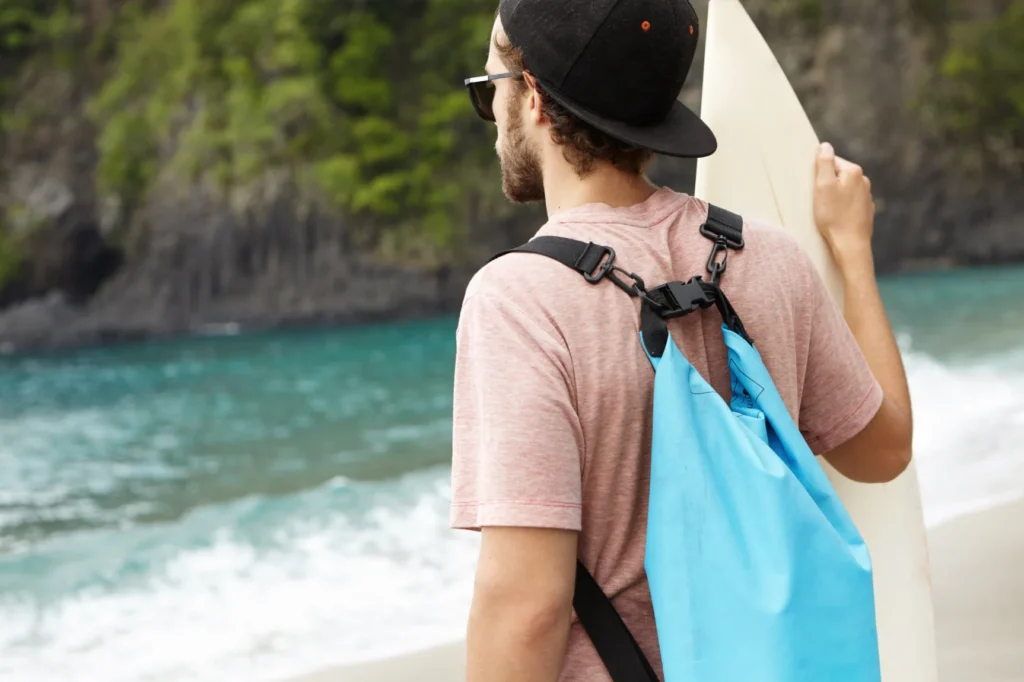
They sound similar, but they are not quite the same.
A dry bag is usually a roll-top bag designed to keep clothing, kit or food dry inside your rucksack.
A waterproof pouch is usually smaller and designed for valuables like phones, keys, cards, maps or electronics.
A simple setup might look like this:
- one large dry bag for sleep clothes
- one medium dry bag for food
- one small dry bag for electronics
- one waterproof phone pouch for wet walks or coastal routes
That is usually enough for most hikes, wild camps and weekend trips.
What Size Dry Bag Do You Need?
Dry bags are usually measured in litres.
For most outdoor use, these sizes make sense:
- 1–3L: phone, keys, wallet, head torch, power bank, first-aid bits
- 5L: spare socks, gloves, hat, small electronics, food
- 8–13L: clothing, waterproof layers, camp kitchen, bigger food kit
- 15–20L: sleeping clothes, sleeping bag, bulky layers
- 30L+: pack liner, bigger camping loads, wet kit separation
For hiking and EDC, small bags are more useful than people expect.
For wild camping, I’d rather have a few smaller dry bags than one massive one. It keeps everything organised and means you do not have to empty your entire bag to find a pair of socks.
Are Dry Bags Fully Waterproof?
Some are. Some are not.
This is where wording matters.
A roll-top dry bag can be very water-resistant and waterproof in normal outdoor use, but many are not designed for full submersion. Alpkit’s Airlok dry bags, for example, use fully taped seams and a roll-top closure, but Alpkit notes they are not intended for full submersion.
That is fine for hiking, camping and rain protection.
But if you are kayaking, paddleboarding, swimming or expecting proper immersion, look for bags or cases specifically designed for that.
For most Wilder Edge trips, the goal is simple: keep your kit dry inside a rucksack, not survive being thrown into a lake for half an hour.
1. Sea to Summit Lightweight Dry Bag — Best Overall Dry Bag
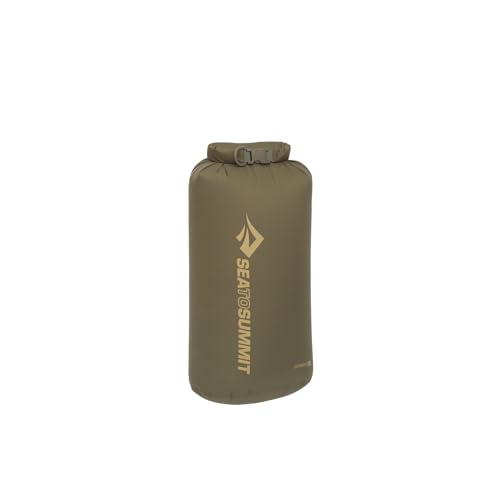
The Sea to Summit Lightweight Dry Bag is one of the safest all-round choices.
It is light enough for hiking and camping, tough enough for regular use, and available in a useful spread of sizes. Sea to Summit says its Lightweight Dry Sacks use 70D nylon and have a 10,000mm hydrostatic waterhead, which makes them a strong option for general outdoor waterproof storage. (seatosummit.co.uk)
This is the dry bag I’d choose for most campers and hikers who want something reliable without going overly heavy.
Best for: hiking, camping, wild camping, clothing and general kit.
Why it earns its place:
- lightweight
- useful sizes
- easy to pack inside a rucksack
- good waterproof rating
- trusted outdoor brand
Possible downside: like most lightweight dry bags, it is not the one I’d use for dragging across rocks or full-on watersports abuse.
For most UK walks and camps, this is exactly the sort of dry bag that makes sense.
2. Alpkit Airlok Dry Bag — Best Budget Dry Bag
The Alpkit Airlok is a brilliant budget-friendly option.
It is simple, useful and available in a lot of practical sizes. Alpkit lists Airlok dry bags with a roll-top closure, taped seams and lightweight ripstop Cordura nylon. The larger Airlok 45L listing notes it uses fully taped seams and a roll-top closure to form a waterproof seal, while also making clear it is not intended for full submersion.
That is exactly the level of honesty you want from outdoor kit.
Best for: budget camping, rucksack organisation, spare clothing and wet-weather walks.
Why it earns its place:
- affordable
- taped seams
- good size range
- lightweight
- roll-top closure
- useful colours for organising kit
Possible downside: not built for submersion or extreme abuse.
If you want to split your kit into simple, weather-protected bundles without spending loads, Alpkit Airloks are a strong shout.
3. Osprey Ultralight Dry Sack — Best Pack Organiser

The Osprey Ultralight Dry Sack is a good choice if you like an organised rucksack.
Osprey gear usually has that clean, travel-friendly feel, and these dry sacks work well for splitting up kit inside a daypack or camping bag.
Best for: rucksack organisation, hiking, travel, clean kit separation.
Why it earns its place:
- lightweight
- good for organising
- strong brand reputation
- easy to pack
- useful for travel and hiking
Possible downside: not the toughest option for rough treatment or watersports use.
This is the dry bag for people who like knowing where everything is. Socks in one, electronics in another, food somewhere else. Less chaos. Better camp.
4. Ortlieb Dry Bag PS10 — Best Heavy-Duty Dry Bag
The Ortlieb Dry Bag PS10 is the one to look at if you want something with a more waterproof, rugged feel.
Ortlieb is best known for waterproof cycling and outdoor bags, and the PS10 dry bag is a solid option for people who want tougher storage than a basic lightweight sack.
Best for: heavier use, wet kit, bikepacking, kayaking-style packing, rougher conditions.
Why it earns its place:
- tough build
- trusted waterproof bag brand
- good for wet or dirty gear
- waterproof focus
- useful for more demanding trips
Possible downside: heavier and less soft-packable than ultralight dry sacks.
If your dry bag is going to get knocked about, stuffed into bike bags, sat on wet ground or used constantly, a tougher option makes sense.
5. Yosh Waterproof Phone Pouch — Best Waterproof Phone Pouch

The Yosh Waterproof Phone Pouch is a simple way to protect your phone on wet walks, camps and coastal routes.
Yosh lists its waterproof phone pouch as touchscreen compatible, with IPX8 rating which it claims is waterproof up to 30 metres for 30 minutes. It also includes a LocTop closure and lanyard.
This is especially useful if your phone is your map, camera, train ticket, emergency contact and weather checker.
Which, let’s be honest, it probably is.
Best for: phones, coastal walks, wet hikes, festivals, paddle-adjacent trips.
Why it earns its place:
- waterproof rating
- lanyard included
- useful for navigation in bad weather
- touchscreen compatible
- protects from dust and rain
Possible downside: phone cameras and touchscreens can still be fiddly through pouches, especially with wet hands.
If you use your phone outdoors, a waterproof pouch is cheap insurance.
6. Aquapac Waterproof Case — Best for Electronics and Valuables

The Aquapac Waterproof Case is a good option if you want something more specialised for electronics, cards, keys or important small items.
Aquapac explains that IPX7 means immersion up to 10 metres, while IPX8 extends protection to greater depths and durations depending on manufacturer testing.
That makes waterproof ratings worth checking properly. Do not just assume “waterproof” means “fine whatever happens”.
Best for: phones, keys, cards, documents, small electronics.
Why it earns its place:
- specialist waterproof protection
- useful around water
- ideal for wet-weather EDC
- good for small valuables
- better than a normal zip bag
Possible downside: not as quick-access as a normal pocket or pouch.
For coastal walks, paddle trips, wet camps and travel, a proper waterproof case is worth considering.
7. Exped Fold Drybag — Best for Wild Camping

The Exped Fold Drybag is a strong wild camping option because it is simple, light and practical.
Exped dry bags are well-suited to keeping sleeping clothes, spare layers, food or electronics organised inside a rucksack.
Best for: wild camping, backpacking, sleeping kit and spare clothing.
Why it earns its place:
- lightweight
- useful for camp organisation
- packs easily
- simple roll-top design
- good for spare layers
Possible downside: as with most lightweight dry bags, it is best used inside a rucksack rather than treated like a haul bag.
For a one-night wild camp, I’d use something like this for dry sleep layers or spare socks. Nothing glamorous. Very appreciated at 10pm.
8. OEX Dry Bag Set — Best Budget Pack Liner Setup

The OEX Dry Bag Set is useful if you want multiple bags for organising a rucksack.
A set is often better than buying one big bag because it lets you split your kit properly.
Use one for clothing, one for food, one for electronics, one for damp or dirty bits on the way home.
Best for: beginners, wild camping, budget packing systems, kit separation.
Why it earns its place:
- multiple sizes
- good for organisation
- easy way to start using dry bags
- budget-friendly
- useful for camping and hiking
Possible downside: budget dry bag sets may not be as durable as premium options.
If you are new to camping or hiking, a simple dry bag set is probably the easiest way to get organised fast.
Best Dry Bag for Camping
For camping, I’d choose the Sea to Summit Lightweight Dry Bag or Alpkit Airlok.
They are practical, packable and easy to use inside a rucksack.
For weekend camps, a few different sizes work best:
- 5L for electronics or small kit
- 8–13L for clothing
- 15–20L for sleep layers or bulkier items
If you only buy one size, go for something around 8–13L. It is the most useful middle ground.
Best Dry Bag for Hiking
For hiking, I’d go small.
You do not need a giant dry bag for a day walk. You need to protect the stuff that makes the day easier if the rain arrives.
A good hiking setup might be:
- 3L for phone, power bank and head torch
- 5L for spare layer and socks
- waterproof phone pouch for bad weather
The Osprey Ultralight Dry Sack or Alpkit Airlok are both good fits here.
Best Dry Bag for Wild Camping
For wild camping, dry bags are not optional in my mind.
A simple system might be:
- 3L for electronics
- 8–13L for clothing
- small pouch for first aid
- 5L for food
- 15L+ for sleep kit or spare layers
The exact setup depends on your bag and season, but the goal is simple: keep the dry stuff dry and make camp less chaotic.
Best Waterproof Pouch for EDC
For EDC, you probably want a small waterproof pouch rather than a full dry bag.
Useful things to protect:
- phone
- wallet
- notebook
- charging cable
- medication
- keys
- cards
- power bank
- small torch
The Lifeventure Waterproof Phone Pouch is a good phone-first option. For mixed valuables, something like an Aquapac waterproof case makes more sense.
A waterproof pouch is especially useful if you walk, cycle, fish, camp, paddle, travel or regularly get caught in rain.
How to Pack Dry Bags Properly
Most roll-top dry bags work best when you do this:
- do not overfill them
- roll the top at least three times
- pack sharp items carefully
- use colours to organise categories
- push out excess air
- clip the buckle securely
- keep electronics in smaller inner pouches
Overfilling is the classic mistake. If you cannot roll the top properly, the bag cannot seal properly.
Also, do not put wet kit in the same dry bag as dry kit unless you enjoy manufacturing your own disappointment.
What Not to Put in a Dry Bag
Dry bags are useful, but they are not magic.
Be careful with:
- sharp tools
- tent pegs
- loose liquids
- electronics without extra protection
- knives
- open food
- wet clothes mixed with dry clothes
- anything you need quickly
Sharp or hard objects can damage lightweight dry bags, especially if you cram them in badly.
For knives, pegs and tools, use a proper pouch or keep them away from delicate waterproof bags.
Dry Bag Mistakes Beginners Make
Buying one massive dry bag
A few smaller bags are usually better than one giant one.
Overfilling them
If you cannot roll the top properly, it will not seal properly.
Forgetting the phone
If your phone is your map, camera and emergency contact, protect it properly.
Thinking every dry bag is submersible
Many roll-top dry bags are for rain, spray and rucksack protection, not full immersion.
Packing wet and dry kit together
That just makes everything damp. Keep wet kit separate.
Putting sharp items inside
Tent pegs, knives and sharp tools can damage lightweight bags. Pack them separately.
Simple Dry Bag Setups by Trip Type
Day hike
- 3L dry bag for electronics
- 5L dry bag for spare layer
- waterproof phone pouch
- small rubbish bag
Coastal walk
- waterproof phone pouch
- 3L dry bag for power bank and keys
- 5L dry bag for warm layer
- dry bag for camera or valuables if needed
Weekend camp
- 5L dry bag for wash kit
- 8–13L dry bag for clothing
- 15–20L dry bag for sleeping kit
- separate bag for dirty or wet clothing
One-night wild camp
- 3L dry bag for electronics
- 5L dry bag for food
- 8–13L dry bag for clothing
- 15L dry bag for sleep kit or spare layers
- small pouch for first aid
EDC setup
- waterproof phone pouch
- small waterproof pouch for wallet, keys and power bank
- zip bag for medication or notebook
- compact dry bag in rucksack for wet weather
Final Verdict: Which Dry Bag Should You Buy?
If I had to pick one dry bag for most UK camping and hiking, I’d choose the Sea to Summit Lightweight Dry Bag.
It is light, practical and well-suited to general outdoor use.
If you want a budget option, go for the Alpkit Airlok.
If you want to organise a hiking bag properly, the Osprey Ultralight Dry Sack is a neat choice.
If you need something tougher, look at Ortlieb.
If your priority is your phone, get a Lifeventure Waterproof Phone Pouch or an Aquapac Waterproof Case.
Do not overcomplicate it. Get a few sensible sizes, keep the important stuff dry, and stop trusting your rucksack to perform miracles in British weather.
Dry Bag FAQs
What size dry bag is best for hiking?
For hiking, a 3L to 5L dry bag is useful for electronics, spare socks, gloves, snacks or a small layer. If you want to protect a bigger waterproof or fleece, go for 8L to 13L.
Are dry bags completely waterproof?
Some are designed for full waterproof protection, but many lightweight roll-top dry bags are intended for rain, spray and rucksack use rather than full submersion. Always check the product rating and manufacturer guidance.
Do I need dry bags if my rucksack has a rain cover?
Yes, they are still useful. Rain covers can help, but water can still get in through gaps, soaked fabric, wet ground or spills. Dry bags protect the important items inside the pack.
What should I put in a dry bag for camping?
Use dry bags for sleep clothes, spare socks, electronics, food, first-aid kit, power bank, head torch and anything you really do not want getting damp.
What is the best waterproof pouch for a phone?
A proper waterproof phone pouch with an IPX7 or IPX8 rating is best for wet walks, coastal routes and camping. The Lifeventure Waterproof Phone Pouch and Aquapac cases are both sensible options.
Can I use a dry bag as a pillow?
Yes, if it has soft clothing inside. A dry bag stuffed with a fleece or spare layers can make a decent camp pillow. Just do not use one full of electronics unless you enjoy neck pain and poor decisions.