
Field Notes From the Edge
Track five core habits. Reflect each morning and night. Build direction through repetition… not motivation.
A FREE 90-day structure for those who want to show up, not just think about it.
A Quick Note on Links
As an Amazon Associate I earn from qualifying purchases.
This helps me create more class content for you to get inspired by.
Please Note
Outdoor activities involve risk. The information on this site is for general guidance only and should not replace proper training, manufacturer instructions, local laws, or your own judgement. Always use equipment safely and responsibly.
Let’s get real-most of us aren’t preparing for a full-on apocalypse. But whether you’re lost in the woods, stranded on the side of the road, or just need to open a really stubborn bottle cap, a good pocket-sized survival kit can be a lifesaver. The trick is balancing compactness with capability. Packing the right gear without ending up with a bulging cargo pocket that makes you look as if you’re smuggling half the corner shop.
I’ve designed and tested more mini survival kits than I care to admit, including ones that went through the washing machine on accident (as i’m sure we’ve all done). So through trial and error, I’ve figured out what actually matters when space is limited. Here’s how you can build just one pocket-sized survival- ensuring it’s kit, light, practical, and crammed with nothing but what you actually need.
Gear helps, but it works best when it backs up real bushcraft skills rather than replacing them.
1. The Knife: essential for edc lovers
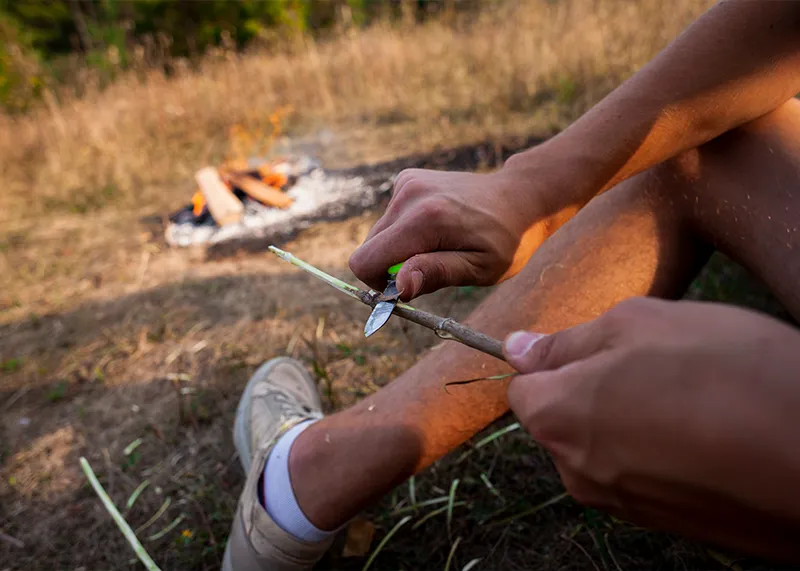
And one thing every survival kit needs, if there is one thing it needs, that’s a decent folding knife. A knife doesn’t have only to cut, but it serves for carving, prying, opening cans, and even hitting a fire starter.
I swear by the Spyderco C94PDBL UK Penknife, super functional & UK compliant.

Spyderco C94PDBL UK Penknife
For the more cost friendly option choose the Victorinox Pioneer Alox Swiss Army Pocket Knife which is also one of the more pocket-friendly EDC options around.
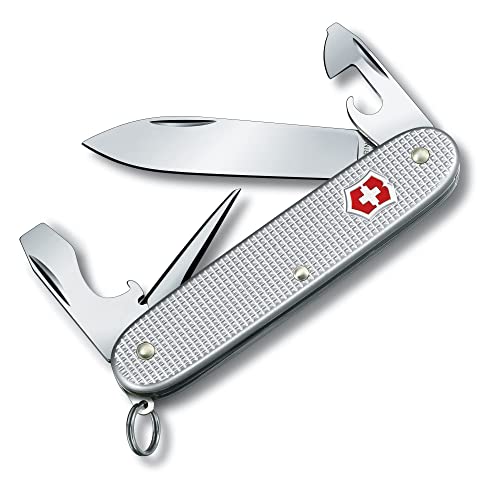
Victorinox Pioneer Alox Swiss Army Pocket Knife
For a deeper breakdown, see this guide to the best pocket knives for UK camping trips. If you want a more everyday-friendly setup, these EDC pieces under £50 are a good place to start.
UK knife law note: Always check whether a knife is legal to carry before putting it in a pocket kit. In general, a folding, non-locking pocket knife with a cutting edge of 3 inches or less is treated differently from locking knives, fixed blades and larger blades. If you’re carrying a knife for camping, fishing or bushcraft, make sure you have a genuine reason and transport it responsibly.
2. Fire Starter: Because Warmth is Life
You can go weeks without food, but hypothermia will jack you up pretty fast. A fire starter is a staple in any pocket-sized survival kit.
Mini Bic Lighter – Foolproof, cheap and reliable. Throw one in your kit.
Ferro Rod – Works in all conditions. The Exotac NanoStriker is compact and throws serious sparks.
Fire Tinder – cotton balls soaked in petroleum jelly, homemade, or SOL Tinder-Quik make fire starting easy.
BIC J25 Mini Lighter

Exotac Men's Nanostriker Firestarter

Firestarting Tabs 100 (Cotton Sticks)

I once used a Bic lighter to start a fire during a freezing rainstorm after my buddy swore he could do it with just “natural” materials. Spoiler, he could not. Always have a backup.
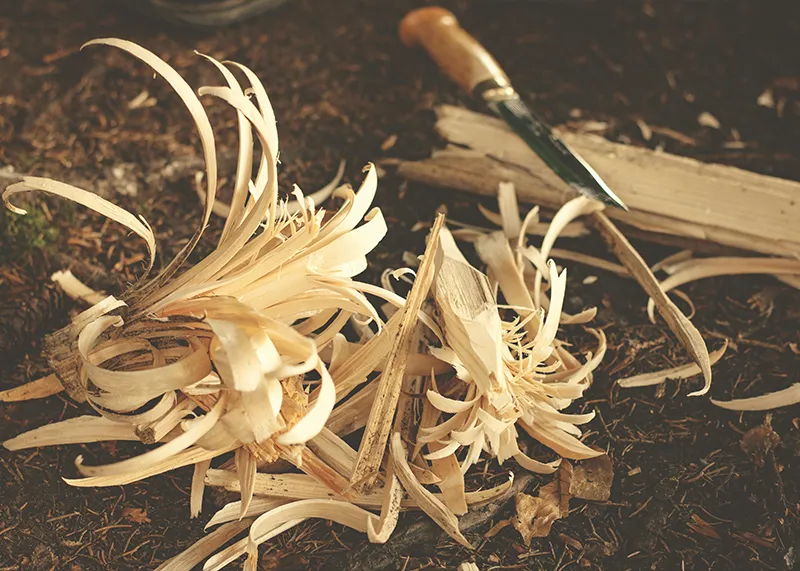
Pair a ferro rod with a good feather stick and you’ve got a far better chance of getting flame from poor kindling. If you’re building this kit for bad weather, learn how to start a fire in wet conditions before relying on any single tool.
Fire safety note: Carrying a lighter or ferro rod doesn’t mean lighting fires anywhere. Only light fires where permitted, avoid flames in dry or windy conditions, and make sure everything is fully out and cold before you leave.
3. The Multitool: When You Need More Than a Knife
A good multitool crams a toolbox’s worth of utility into a pocket-sized package. While a full-sized Leatherman is great,

Gerber 1027819 Dime Mini Multi-Tool Black
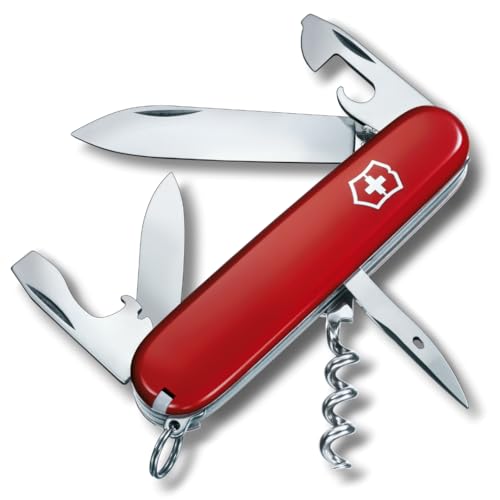
Victorinox Spartan Swiss Army Knife
gives you pliers, scissors, and screwdrivers without the bulk.
Pro tip: The scissors on a Victorinox are crazy sharp. I use mine to cut paracord, fishing line, and even trim a fraying shoelace before it completely unraveled.
For a broader everyday carry setup, this EDC essentials guide covers the simple kit that earns its place.
4. Paracord: The Ultimate Utility Rope
A few feet of 550 cord can save the day if a shelter must be rigged, if gear must be repaired, or even inner strands used as a fishing line.

Abma Cord Paracord 550 4mm 15m 100% Nylon Rope
To carry in a pocket-sized kit, I wrap a few feet onto a lighter or make it into a paracord keychain. If you’re looking at going ultra-compact, consider the Titan SurvivorCord (£46.24 for 100ft on amazon) – which takes the same ol’ paracord and just adds some fishing line, wire, and some waterproof tinder.
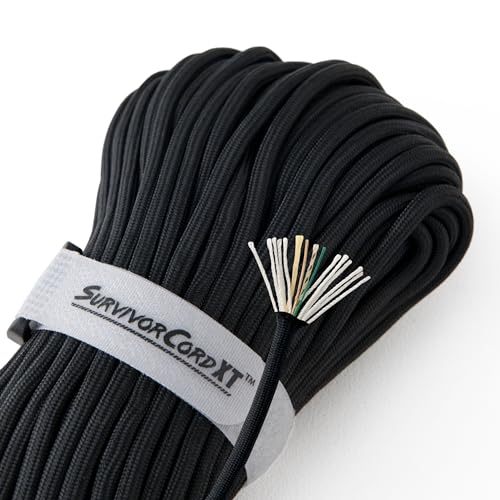
Titan Survival's 1000 LB Survival Paracord
Paracord knots are easy to practise at home, making them ideal for a few backyard bushcraft projects.
5. Light Source: Being Able to See in the Dark Matters
One tiny but powerful flashlight is non-negotiable. Phones die but a dedicated light source can last for days.
Olight i1R 2 EOS – Tiny, rechargeable, and bright.
Fenix E05 – Runs on a single AAA battery, tough as nails.
Nitecore TINI 2 – Ridiculously powerful for its size.
OLIGHT I1R 2 Pro EOS EDC Keychain Torch

Fenix E05R Rechargeable Mini Keychain LED Torch

Nitecore TINI 2 Titanium, small flashlight

I think I used my keychain flashlight more than any other tool to date: check the engine problems, go back to camp from some faraway place, once not to step on a seriously angry rattlesnake.
6. First Aid: Because Getting Injured Is Real
Even within a pocket-sized survival kit, some small setup of first aid is necessary. These are what I carry with me:
- Plasters (for blisters-the worst enemies)
- Alcohol wipes (clean everything)
- Super glue (closes minor cuts indeed)
- Ibuprofen (headaches don’t care if you’re in the wild)
If you’ve got space, a Mini Adventure Medical Kit is a great all-in-one option.

Guardsy Mini First Aid Kit
For longer walks, build this out with the first-aid items worth carrying on UK outdoor adventures.
7. Navigation & Signaling: Get Found, Stay Safe
A small compass and a simple signal mirror can save your bacon if you need to do any navigating, or try to attract somebody’s attention. For a whistle, the Acme Tornado T200 takes literally next to no space at all.
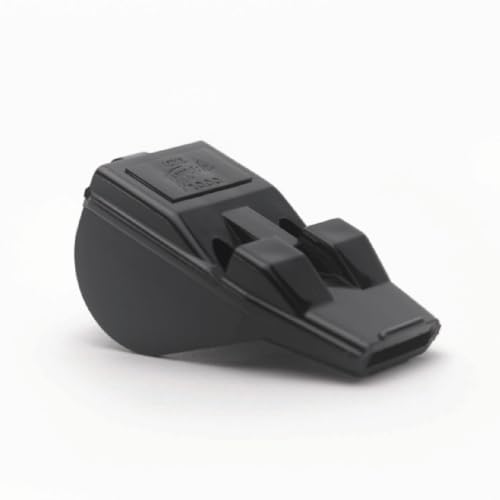
ACME Tornado T2000 Emergency Whistle
I once used a whistle to signal a buddy after we got separated in thick fog. He heard me long before he could see me, whistles carry sound way farther than yelling.
Basic navigation and signalling matter even on simple routes, especially around exposed coastline walks.
Final Thoughts: Build It, Test It, Carry It
A pocket-sized survival kit is only as good as your willingness to carry it. If it’s too bulky, you’ll leave it behind. Keep it simple: knife, fire starter, multitool, paracord, light, first aid, and navigation.
Test your gear before you need it, modify where needed, and know how to use what you are packing. You do not want to be fiddling with a piece of gear you never used when it’s time to use it for real.
Got a favourite survival kit piece? Let me know down in the comments, I’m always looking for an excuse to add more tools into my collection. Stay safe, stay prepared, and may your pockets always be packed with all the essentials.
Pocket Survival Kit FAQs
What should be in a pocket survival kit?
A good pocket survival kit should cover the basics: cutting, fire, light, first aid, water, repair and navigation. You don’t need to carry everything, but you do need a few small tools that solve real outdoor problems.
Is a pocket survival kit enough for hiking or wild camping?
No. Think of it as a backup, not your full setup. For hiking or wild camping, you still need suitable clothing, water, food, a charged phone, navigation, shelter, and a proper first-aid kit.
Can I carry a knife in a pocket survival kit in the UK?
You need to be careful here. GOV.UK says most knives are illegal to carry in public without a good reason, except a folding pocket knife with a cutting edge of 3 inches or less. Lock knives and fixed blades are treated differently, so don’t assume every camping knife is fine to carry day to day.
What’s the most useful item in a pocket survival kit?
For most people, a small torch, first-aid item, lighter or ferro rod, and a basic multitool are more useful than flashy survival gadgets. The best item is the one you know how to use properly.
Should I carry a compass if I already have GPS on my phone?
Yes. A phone is useful, but batteries die and signal can drop. A small button compass or map compass gives you a backup, especially if you’re walking somewhere unfamiliar.
How often should I check my survival kit?
Check it every few months, and always before a trip. Replace used first-aid items, check batteries, inspect lighters or fire starters, and make sure anything metal is clean and dry.