
Field Notes From the Edge
Track five core habits. Reflect each morning and night. Build direction through repetition… not motivation.
A FREE 90-day structure for those who want to show up, not just think about it.
A Quick Note on Links
As an Amazon Associate I earn from qualifying purchases.
This helps me create more class content for you to get inspired by.
Please Note
Outdoor activities involve risk. The information on this site is for general guidance only and should not replace proper training, manufacturer instructions, local laws, or your own judgement. Always use equipment safely and responsibly.
There’s something deeply satisfying about knowing you can fend for yourself in the wild-whether that’s making fire from scratch, crafting tools, or just getting better at tying knots that won’t betray you. But here’s the thing: you don’t need to be deep in the woods to sharpen your bushcraft skills. As a matter of fact, your back garden, balcony, or even living room can be the perfect training ground.
If you’re in the UK and itching to get better at bushcraft, here are five simple projects you can practise at home. Whether you’re prepping for a wild camping trip or just fancy learning some survival skills, these will get your hands dirty in the best way possible.

1. Master the Art of Feather Sticks
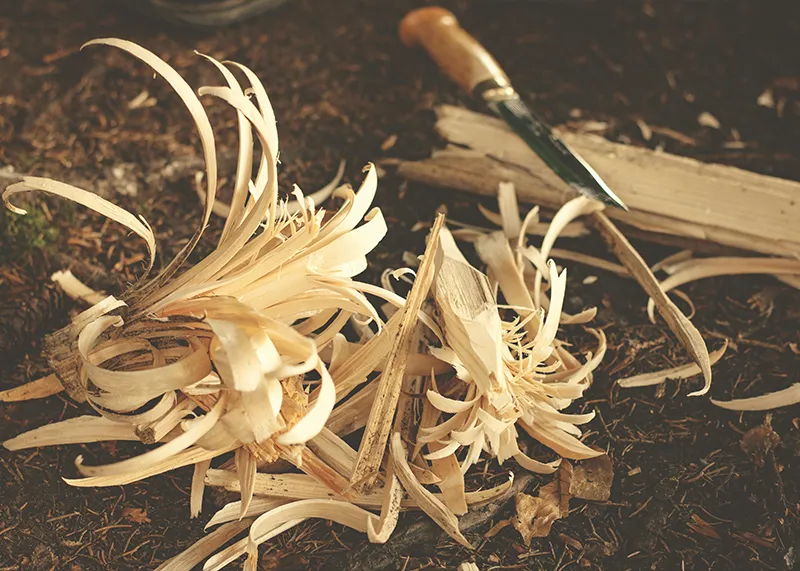
A feather stick is your best friend when kindling is damp, and it’s an essential skill for fire-lighting in the UK’s moist climate-yeah, thanks, British weather. The aim is to take a stick and turn it into fine, curled shavings that take a spark like a dream.
How to Practice at Home:
- Get hold of a mora knife-a real bushcraft stalwart-and a dry stick.
- Carve thin curls with controlled strokes without cutting them off.
- Continue until you have a fluffy, feathered masterpiece ready to catch a flame.
Morakniv M-13216 Companion Fixed Blade Outdoor Knife

Practising this in the garden or over a fire pit gives you a real feel for knife control and fire prep. If you’re indoors, just skip the fire bit unless you fancy explaining scorch marks to your landlord.
UK knife note: A fixed-blade bushcraft knife can be useful for controlled practice on private land or permitted camps, but it is not something to casually carry in public. Check UK knife law before transporting or using any blade outside your home.
If you’re unsure what kind of blade makes sense for camping, read this guide to the best pocket knives for UK camping trips first.
2. Perfect Your Paracord Knots
A solid knot can be the difference between a secure shelter and a tarp flying off into the night like a rogue kite.
Try These at Home:
- Bowline Knot – A classic survival knot that won’t slip under pressure.
- Trucker’s Hitch – Perfect for tightening a ridgeline for tarps.
- Clove Hitch – Simple but effective for lashing things together.
Gear You’ll Need:
A decent length of paracord. UK brands such as Kombat UK offer good options. Practice your knots around chair legs, table corners, or even your bed frame.
aufodara 4pcs 19ft/6 meters Paracord Rope

Kombat UK Lightweight Unisex Outdoor Paracord Reel available in Olive Green - 100 Metre

Paracord also earns its place in a pocket-sized survival kit because it handles shelter, repairs and quick fixes without taking up much room.
3. Making Char Cloth for Fire Starting
Char cloth is an old-school fire-starting trick that takes cotton fabric and turns it into a slow-burning ember with just a spark. It’s like a cheat code in nature.
How to Make It:
- Find 100% cotton fabric-old t-shirts work great.
- Cut it into small squares and put them in a tin with a small hole in the lid.
- Place the tin in a fire or on top of a gas stove and let it smoulder.
- Once smoke stops pouring out, take it out and let it cool.
The result is a firelighting material that catches even the faintest spark off a ferro rod-required for wet UK weather. Try it at home and stash some ready for your next adventure.
Fire safety note: Practise fire skills only where it’s safe and allowed. Avoid open flames in dry, windy or high-risk conditions, keep water nearby, and make sure everything is fully out and cold before you leave.
4. Whittle a Tent Peg
There’s an art to making a strong, reliable tent peg from a humble stick. And given how often UK ground seems to reject flimsy plastic pegs, it’s quite nice to have one you’ve knocked up yourself as a backup.
What You Need:
- A decent bushcraft knife
- A substantial, straight branch (hardwoods such as hazel or ash work well)
Steps:
- Slice your stick down to about 8 inches
- Whittle one end to a sharp point.
- On the other end, notch for guy lines.
Whittling teaches blade control, patience, and resourcefulness plus, it’s a great way to pass the time on a drizzly afternoon.
5. Build a Mini Debris Shelter
Shelter-building isn’t all about how to stack logs in a forest. It’s about understanding structure, insulation, and stability. Best way to practice? Build a mini one first.
Try This Indoors or in the Garden:
- Use twigs and sticks to create a frame.
- Add layers of leaves, moss, or dry grass to simulate insulation.
- Test its durability, does it stay up in the wind? Does water run off the roof?
Mastering the principles on a small scale means you’ll be far more confident when building full-size shelters in the woods. Plus, it’s a fun way to get kids involved if you’ve got little adventurers at home.
If you want to turn shelter practice into a proper overnight setup, this UK wild camping setup guide is a useful next step.
Final Thoughts: Bushcraft is a Skill, Not Just a Hobby
Bushcraft isn’t about looking cool on Instagram with a ferro rod and a freshly caught trout. It’s about honing skills that make you more self-sufficient and prepared-whether for a weekend in the wild or just for the sake of knowing you could if you had to.
In truth, these are five elementary undertakings to help one practice bushcraft with very scant equipment and without any great swaths of woodland outside one’s door. Get your knife out, some paracord too, and, perhaps, one or two strongly brewed cups of tea-because every great snippet of bushcraft begins with the brew.
Want to Give Your Kit That Little Boost? Check out The Bushcraft Store or Heinnie Haynes, suppliers for good kit that isn’t going to let you down.
Now, go out there-or technically, stay in-and start practicing those skills!
Once you’ve practised these small projects, move on to these five bushcraft skills every camper should master.
Backyard Bushcraft FAQs
Can I practise bushcraft at home?
Yes. Simple skills like knot tying, feather sticks, tent peg whittling, tarp setup and shelter planning can all be practised at home. Just keep it safe, avoid damaging trees or wildlife, and only use tools where it’s sensible to do so.
What bushcraft skill should beginners learn first?
Knot tying is probably the easiest place to start because you can practise it indoors, in the garden, or on a walk. Feather sticks are useful too, but they require more care because you’re working with a blade.
Can I practise fire-starting in my garden?
You can practise preparing tinder or making feather sticks without lighting anything. If you do light a fire, follow local rules, keep it contained, avoid dry or windy conditions, and never leave it unattended.
Is it legal to use a bushcraft knife in the UK?
Owning a knife and carrying one in public are different things. GOV.UK says a folding pocket knife with a cutting edge of 3 inches or less is an exception if it does not lock, but larger, fixed-blade or locking knives usually need a good reason to be carried in public.
What gear do I need to start practising bushcraft?
You don’t need much. A length of paracord, some scrap wood, a tarp or old sheet, a notebook and a safe cutting tool are enough for most beginner projects. Start with skills first, then buy better gear once you know what you’ll actually use.
Can kids practise bushcraft?
Yes, but only with proper adult supervision. Knot tying, shelter building and nature observation are good beginner activities. Knife work and fire-starting should only be introduced carefully, with clear rules and close supervision.