
Field Notes From the Edge
Track five core habits. Reflect each morning and night. Build direction through repetition… not motivation.
A FREE 90-day structure for those who want to show up, not just think about it.
A Quick Note on Links
As an Amazon Associate I earn from qualifying purchases.
This helps me create more class content for you to get inspired by.
Please Note
Outdoor activities involve risk. The information on this site is for general guidance only and should not replace proper training, manufacturer instructions, local laws, or your own judgement. Always use equipment safely and responsibly.
There’s something primal about starting a fire with nothing but a knife and a stick. It’s like you’re flipping the bird to modern convenience and saying, “I got this.” But if you’ve ever tried making a feather stick and ended up with a pile of sad, broken curls instead of a roaring blaze, don’t worry, you’re not alone.
Feather sticks are one of those core bushcraft skills every camper should understand, especially when conditions are damp or awkward. They replace tinder and catch a spark like it’s nobody’s business. Problem is, there’s a right way-and a very wrong way-of making them. Let’s break it down so your next campfire doesn’t leave you huddled in the cold.
What Is a Feather Stick, and Why Do You Need One?
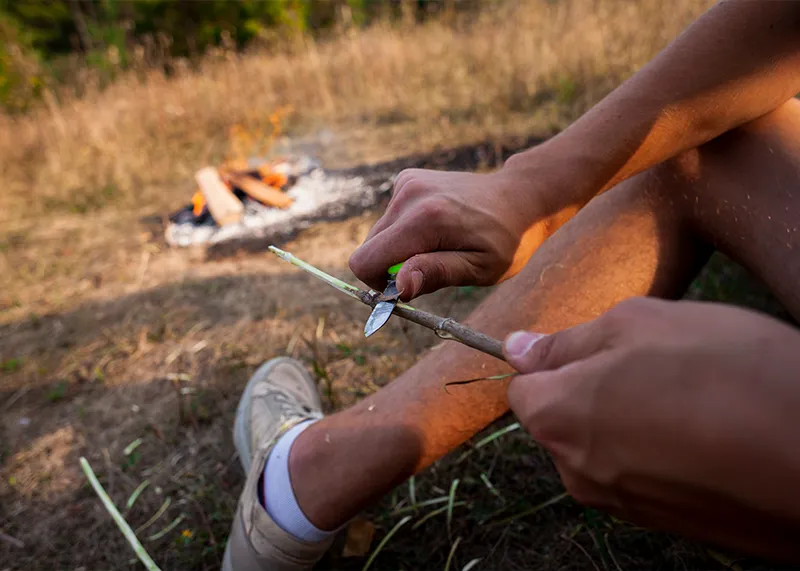
The feather stick is simply a single, carefully shaved wood that creates many thin, curled shavings-that is, the “feathers”-which tend to remain connected to the feather stick. All these dainty curls catch on fire really very easily, thereby making them pretty good kindlings whenever dry tinders are scarcer.
I learned this the hard way on a soggy camping trip in the Pacific Northwest. Everything was wet, my fire-steel was practically mocking me, and my lighter was about as useful as a chocolate teapot. A well-made feather stick saved the day, and I’ve sworn by them ever since.
Step 1: Pick the Right Wood (It Matters More Than You Think)
Not all woods are created equal, and selecting the wrong type will make feather sticking feel like trying to shave a porcupine with a butter knife. You want a dry, straight-grained wood such as the following:
✅ Cedar – Burns hot and fast.
✅ Pine – Resin-rich and ignites easily.
✅ Birch – Great for curls, especially with bark as backup tinder.
✅ Fatwood – Holy Grail of Firestarting: high resin equals light easy. Do not take any punky, rotted, or knot-filled sections because they just fall apart instead of curling.
If the wood around you is damp, this guide to starting a fire in wet conditions will help you build the full process around your tinder.
Step 2: Employ a Sharp Blade-a Dull Blade Ruins Everything
Your knife is your best friend. A dull blade will tear the wood instead of slicing smooth, even curls, translating to frustration and wasted effort. Go for razor-sharp with a Scandi grind for maximum control.
Recommended Knife: Any sharp knife will work for feather sticks but the Opinel Lock Knife is a safe bet for an all rounder – Affordable & crazy sharp.

For more options, see this guide to the best pocket knives for UK camping trips.
Slice down in smooth, controlled strokes with your knife held at a shallow angle. Let the blade do the work-no need to Hulk-smash it.
Knife law note: In the UK, a non-locking folding pocket knife with a cutting edge of 3 inches or less is generally treated differently from larger or locking knives, but you still need to use common sense. For fixed blades, locking knives or anything larger, make sure you have a genuine reason and transport it responsibly.
Step 3: Get the Angle Right (It’s Like Carving Butter, Not Wrestling It)
Just-right feather sticks are all a matter of maintaining a real consistent shallow angle. If your angle is too steep, you cut thick chunks instead of releasing thin wispy curls. Too flat and you will only scratch the surface.
✔️ Good: thin, even, and still attached.
✖ Bad: thick and brittle, or falling completely off. ☠️
Practice with a few different sticks until you hit that sweet spot.
Step 4: Keep the Curls Attached (Don’t Go Full Lumberjack Mode)
The whole point of a feather stick is that the curls stay attached to the wood. If they fall off, you just made fancy wood shavings—not the fire-starting magic we’re after.
To keep them attached:
- Use controlled strokes.
- Don’t press too hard.
- Stop before you reach the bottom of the stick.
Aim for a cluster of curls that almost resembles a wooden pom-pom. That’s how you know you nailed it.
Fire safety note: Practise the carving skill anywhere safe, but only light fires where they’re allowed. Avoid open flames in dry, windy or high-risk conditions, keep fires small and controlled, and make sure everything is fully cold before you leave.
Step 5: Light It Up (And Enjoy the Warmth of Your Victory)
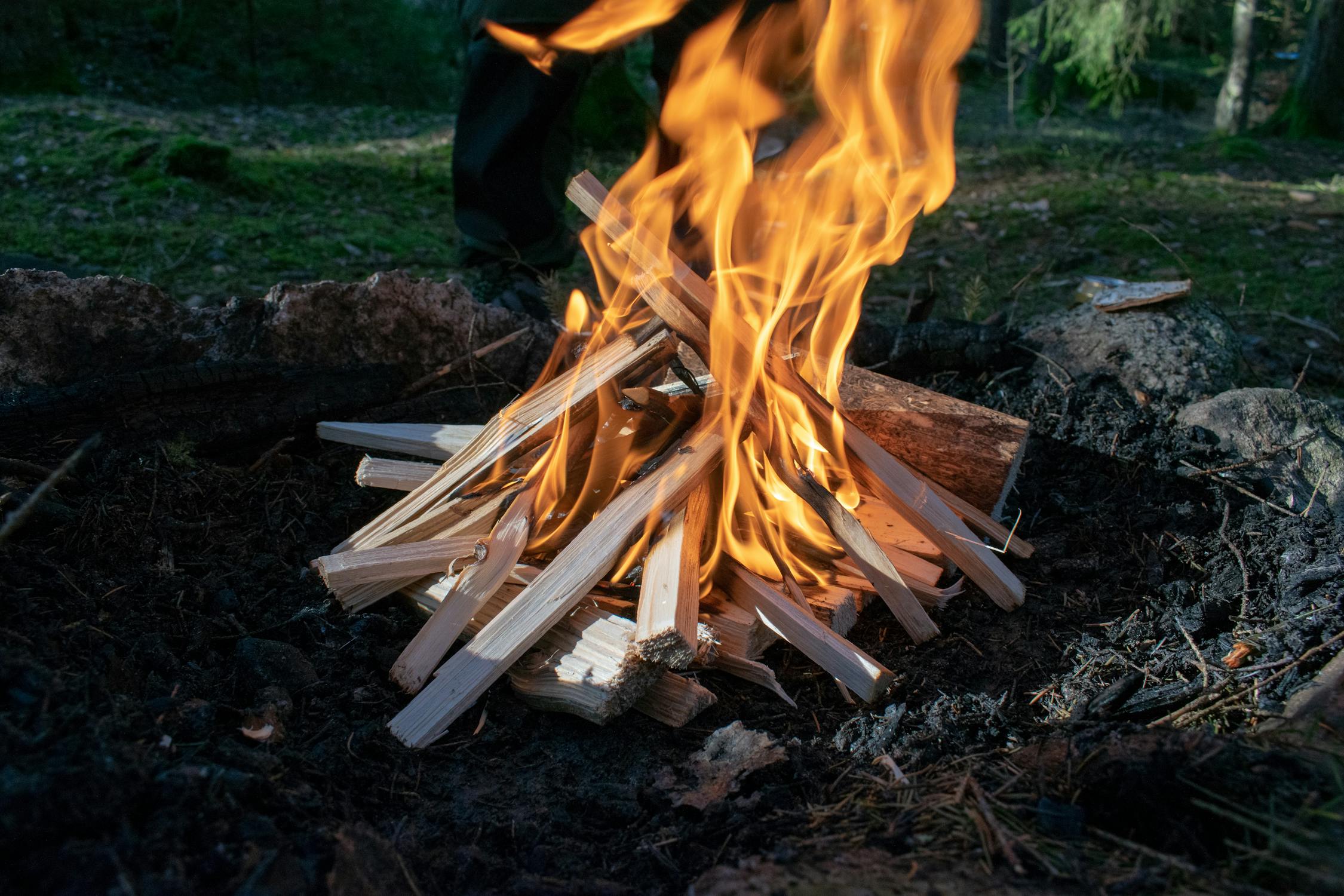
Having prepared your feather stick, now is the time for the real test. Position it in your fire lay (a teepee or log cabin setup works best) and light it up with a ferro rod, lighter, or matches.
🔥 The best ferro rod: Light My Fire – throws hot sparks even in wet conditions.

A ferro rod is also a useful piece in a pocket-sized survival kit, especially if you like carrying simple backup tools.
When the fine curls catch, before you can say fire from heaven, you will have a survival show-worthy fire.
Conclusion: Master the Feather Stick, Master the Fire
Learning to make a feather stick is not just about looking cool, although, yes, it does tend to make one look like some sort of wilderness pro. But in all seriousness, it is a skill that can save your bacon when all else fails.
Give it a try the next time you are out in the woods. Use dry wood, have a sharp knife, and get the curls just right. Before you know it, people will be coming to you whenever the fire needs lighting.
If you’re new to this, start small with a few backyard bushcraft projects before relying on the skill outdoors.
And if anyone asks how you learned this wizardry, just wink and tell them, “It’s a trade secret.”
Got a favourite knife for making feather sticks? Drop it in the comments – I’m always up for trying new gear.
Feather Stick FAQs
What is the best wood for making feather sticks?
Dry, straight-grained wood is easiest to work with. Cedar, pine, birch and other softwoods are good starting points because they shave cleanly and catch a spark more easily than dense hardwoods.
Do feather sticks work when the ground is wet?
Yes, but only if the inner wood is dry enough. Look for standing deadwood or split a small stick open to reach the drier core. Wet bark and damp outer wood are usually the problem, so remove them before carving.
What knife should I use for feather sticks?
Use a sharp knife with good control. A fixed blade is usually easiest at camp, but a sturdy folding knife can work for light practice. In the UK, be mindful of knife law when carrying any blade in public.
Are feather sticks safe for beginners?
They can be, as long as you take your time. Cut away from your body, keep your supporting hand behind the blade path, and avoid rushing. A dull knife is often more dangerous than a sharp one because it slips more easily.
Can I practise making feather sticks at home?
Yes. Practising in the garden is a good way to learn the cuts without needing to light a fire. You can work on thin, controlled curls first, then test them later in a safe, permitted fire setup.
Can I light a fire anywhere if I use feather sticks?
No. Feather sticks are just a fire-starting technique, not permission to light a fire. Only light fires where they are allowed, avoid open fires in dry or windy conditions, and always follow local rules.